In the wake of stricter government food safety controls implemented since early 2025, the transportation of beverages and food ingredients is facing unprecedented demands, ranging from rigorous declarations and inspections to precise storage conditions. Even a minor glitch in the chain can cause costs to skyrocket, leaving products stranded in warehouses and missing their “golden window” for market entry. To delve deeper into the journey from raw materials to the consumer’s hand, we sat down for a conversation with Ms. Nguyen Ngoc Ha, Freight Pricing Manager at SOTRANS Logistics.
Beverage logistics goes beyond simple transport to encompass preservation and compliance
Interviewer: Hello Ms. Ngoc Ha. 2025 is a volatile year for the food ingredients industry. When referring to raw materials and ingredients, people often think of sugar, milk powder, cocoa, and so on. As for beverages, the common categories are alcoholic drinks, non-alcoholic drinks, and functional beverages. In your opinion, does this classification fully reflect the industry’s landscape?
Ms. Ngoc Ha: Hi Trang. I think your list covers the fundamental products in the beverage industry. In fact, the current beverage market is extremely diverse. We could also include other products such as tea, coffee, fruit juices, energy drinks, or sports drinks.
Interviewer: Could you share more specifically about the unique characteristics of the beverage industry in international and domestic transport?
Ms. Ngoc Ha: The specifics of transporting beverage products can be seen through four key factors. First is the temperature requirement. Some products only need to be stored at room temperature, while many others require chilled or frozen conditions.
Second is the requirement for safety and handling compatibility. The transport unit needs to carefully check the Material Safety Data Sheet (MSDS) to determine the feasibility of co-loading with other goods, aiming to avoid risks of chemical reactions or odor contamination.
Third is the time pressure. To ensure freshness and shelf life, beverage products usually demand fast transport speeds and strict control over delivery timelines.
Finally, there are the stringent legal requirements. As this group of products directly affects consumer health, customs procedures and state inspections are typically applied very rigorously.
Interviewer: Given these specific characteristics, what concrete challenges is the beverage transportation process currently facing?
Ms. Ngoc Ha: In reality, we are confronting two major challenges. The first challenge is the balancing act between cost and time. In a highly competitive market, businesses naturally tend to optimize logistics costs to boost their pricing edge. However, beverage products are highly seasonal and time-sensitive, requiring rapid transit speeds. Optimizing costs while simultaneously guaranteeing the delivery schedule creates immense pressure, demanding agile and efficient coordination from logistics providers.
The second challenge lies in the complex import procedures. This product group relates directly to human health, so it must clear multiple layers of control accompanied by a heavy volume of documentation. At the same time, safety regulations and standards are frequently updated, requiring constant monitoring and quick adaptation.
Therefore, the logistics team is required to continuously update their knowledge and elevate their expertise. We do not just execute shipping; we act as an “extended arm,” proactively advising and supporting clients in preparing dossiers to ensure fast customs clearance and minimize any arising risks.
Solving the Optimization of Logistics Cost and Delivery Transit
Interviewer: Many businesses nowadays want to optimize costs while still demanding fast delivery times. How does SOTRANS handle this dilemma?
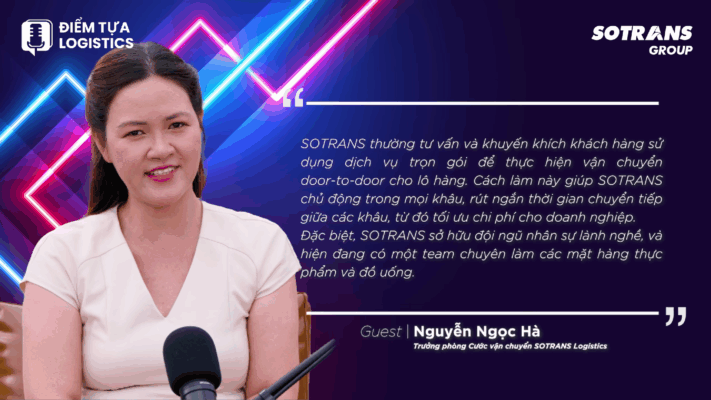
Ms. Ngoc Ha: This is precisely the problem that showcases a logistics company’s true capability. At SOTRANS, we prioritize advising clients to utilize end-to-end service solutions. When implemented under this model, the entire process is monitored seamlessly from start to finish, reducing waiting times between stages and thereby optimizing overall costs.
Additionally, SOTRANS possesses a specialized team dedicated to the beverage sector, equipped with experience and a deep understanding of the relevant workflows and paperwork. This helps shorten processing times and simplifies documentation requirements.
Particularly in urgent cases, we can arrange for personnel to work directly on-site at the client’s office to process paperwork and finalize procedures on the spot, accelerating customs clearance and securing delivery timelines.
Interviewer: Could you share some real-life case studies where SOTRANS helped clients overcome these difficulties?
Ms. Ngoc Ha: A prime example involves a shipment for Orion. During one transit, the vessel was delayed due to a typhoon in China, which escalated the pressure on the client’s timeline. Despite choosing sea freight to optimize costs, Orion still urgently needed the cargo to maintain their production schedule. As soon as the vessel docked at Cat Lai Port, the SOTRANS team rapidly cleared all formalities and organized same-day delivery, helping the client sustain production seamlessly as planned.
Another case is ABI Vietnam’s exports to Laos. Since Laos is a landlocked country with no seaports, we advised a solution to transit the cargo via Laem Chabang Port (Thailand) before moving it by road to the Lao border. This solution not only optimized costs compared to direct transport alternatives but also ensured stable delivery timelines.
These situations demonstrate that the role of SOTRANS goes far beyond transportation; we act as a solution consultant, helping clients flexibly respond to supply chain disruptions.
Storage Management and Minimizing Product Damage in the Transit Chain
Interviewer: We have discussed import procedures extensively. How does SOTRANS advise on transport methods and vehicle arrangements in actual field operations to optimize for each client group?
Ms. Ngoc Ha: The core factor lies in cargo preservation and handling. At SOTRANS, clients are always thoroughly advised on packaging standards before shipping, a crucial step that is sometimes overlooked. Inadequate packaging can cause denting, leakage, or product damage during transit, directly affecting cargo quality.
A real-life case from many years ago involved a shipment of flavorings for the Heineken brewery. The goods were packed in aluminum drums according to US manufacturing standards, but they were placed on standard pallets without proper bracing or securement. When transported in a shared container with other types of cargo, the constant vibrations and impacts caused the drums to breach, resulting in leaks that rendered the entire shipment unusable. Following this incident, SOTRANS collaborated with the enterprise to develop a reinforced packaging solution using wooden pallets with four-sided protective frames to ensure absolute safety for all subsequent shipments.
Interviewer: For shipments facing high damage risks or demanding strict storage conditions like those, which transport mode do you prioritize?
Ms. Ngoc Ha: The choice of transport mode depends on balancing speed and cost requirements. Air Freight is typically prioritized for urgent, high-value shipments or those requiring strict climate control to minimize transit times. On the other hand, Sea Freight suits businesses with more flexible timelines that focus heavily on cost optimization.
Generally, the SOTRANS team evaluates the specific storage attributes of each product type alongside the client’s business plan to tailor the most appropriate transportation framework.
Interviewer: As you mentioned, some food and beverage items contain chemical components. Is transporting them more rigid compared to standard cargo?
Ms. Ngoc Ha: I must emphasize that it is exceptionally strict. Products with chemical elements require isolated control and pose potential risks to co-loaded cargo. In fact, certain shipments can be rejected by carriers if they contain highly corrosive components or pose fire and explosion hazards. These characteristics dictate the proper mode of transport and determine whether the cargo can be accepted on aircraft or vessels. Therefore, mastering the technical specifications of the cargo is a mandatory prerequisite for designing a safe transport plan.
Interviewer: Beyond chemical and physical attributes, a unique feature of the F&B industry is expiration dates. Both importing and exporting must secure the “golden window” to prevent product spoilage. What solutions has SOTRANS developed to support clients regarding this time and temperature challenge?
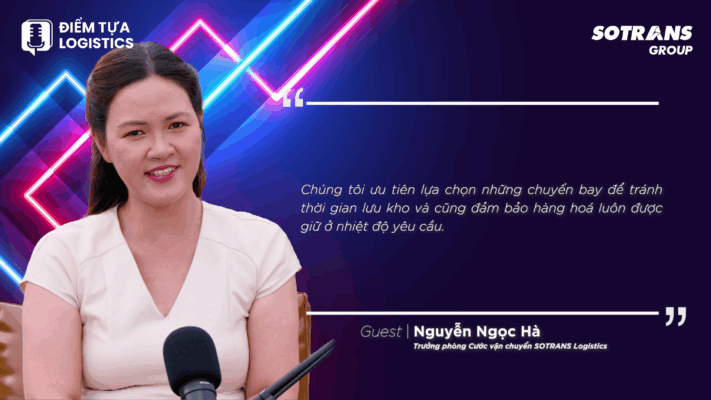
Ms. Ngoc Ha: For food items, we always prioritize two principles: maximizing speed and minimizing operational risk. Accordingly, SOTRANS prioritizes direct routing, minimizing transshipments across multiple points. Every transshipment introduces risk, particularly the danger of disrupting the standard temperature chain, which compromises cargo quality. If transshipment is unavoidable, the shortest and simplest routes are selected. Additionally, transport schedules are tightly aligned with pick-up and delivery times to minimize warehouse storage duration at ports.
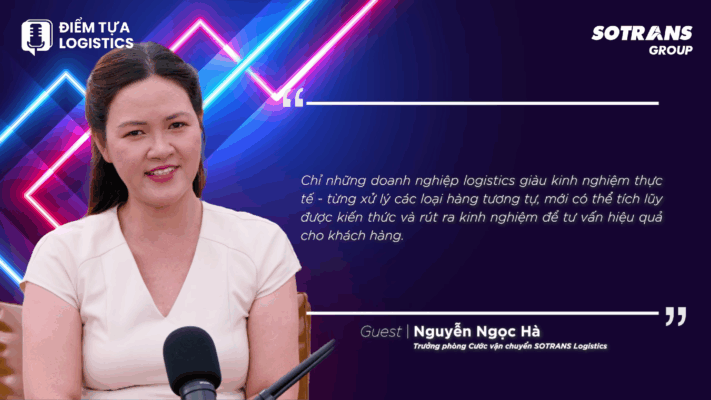
To execute this effectively, a logistics provider must possess extensive field experience and flexible troubleshooting capabilities. Only when a team has directly handled such demanding cargo categories do they gain the responsiveness and competence required to deploy optimal solutions for clients.
Moving Towards a Green and Sustainable Supply Chain
Interviewer: What is SOTRANS’s development strategy in the coming time to adapt to the evolving beverage market?
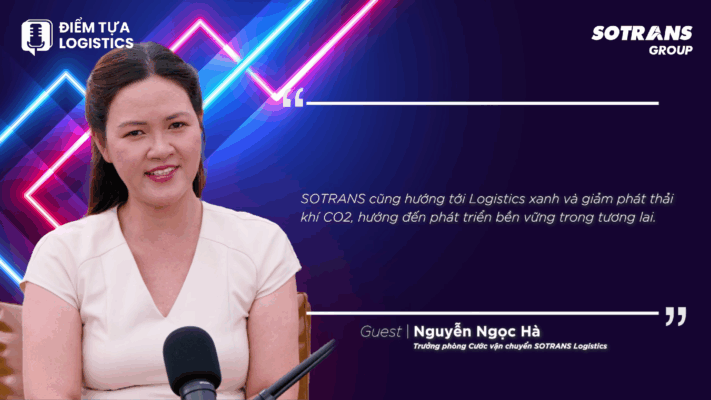
Ms. Ngoc Ha: In our upcoming strategy, SOTRANS is focusing on building integrated and sustainable specialized logistics capabilities for the F&B sector. Alongside our ongoing investments in a modern chemical warehouse network, we are aggressively expanding our cold storage systems and refrigerated fleet to finalize a seamless cold chain that meets escalating demands for preservation and speed. Simultaneously, green logistics remains one of our guiding principles. SOTRANS aims to optimize operations, reduce CO2 emissions, and enhance resource efficiency, thereby partnering with clients on their journey toward sustainable development.
Interviewer: Thank you, Ms. Ngoc Ha, for these highly valuable insights today!
—————–
Executed and edited by SOTRANS Group.
|
The ‘Logistics Anchor’ podcast series, a place to share real-world stories from the SOTRANS Group team, a corporation with over 50 years of experience in the logistics sector in Vietnam. Here, every supply chain challenge is viewed through the lens of a practical problem, where solutions are directly tied to operations and the actual needs of businesses. Watch the full series here. |
(SOTRANS Group News)