2025 marked a period of robust transformation for Vietnam’s logistics industry, characterized by high-level forums, strategic initiatives, and major events aimed at boosting the logistics service market, connecting import-export activities, and enhancing national competitiveness. Join SOTRANS Group in reviewing the highlight events of Vietnam’s Transport and Logistics sector in 2025.
Vietnam’s seaport system structure following administrative mergers
As of July 2025, following administrative unit mergers under Resolution 31/2023/UBTVQH15, Vietnam’s seaport system officially comprises 34 seaports, classified into four levels: Special Class, Class I, II, and III. This restructuring has optimized the management and planning of the network across new administrative boundaries.
Key figures include: 34 operational seaports, 296 wharves, over 96,000 meters of berth length and distributed across 5 key marine economic regions: Northern, Central, South Central, Ho Chi Minh City, and the Mekong Delta.
Classification Breakdown:
| Special class | The two largest hubs, Hai Phong and Ba Ria – Vung Tau. |
| Class I | 1 core ports, including Quang Ninh, Da Nang, Ho Chi Minh City, Dong Nai – Binh Phuoc, and Can Tho (merged Mekong Delta region). |
| Class II | Local general ports serving provincial/city-level needs. |
| Class III | Specialized industrial ports or small local facilities. |
Highlight international events and forums in 2025
Vietnam Logistics Forum 2025
Themed “Vietnam Logistics – Breakthrough into a New Era,” the forum featured Prime Minister Pham Minh Chinh and leaders from the Ministry of Industry and Trade. Nearly 500 delegates discussed strategic trends and global supply chain challenges. The Prime Minister emphasized that logistics is the “lifeline of the economy” and called for drastic reforms to reduce costs.
While the industry has grown steadily at 14-16% annually (contributing 4.5-5% to GDP), logistics costs remain high at 16%, compared to the global average of 11-12%. “With a trade turnover of $900 billion, a 5% reduction in costs could save $45 billion. This figure is a compelling call for decisive innovation,” the Prime Minister stated.
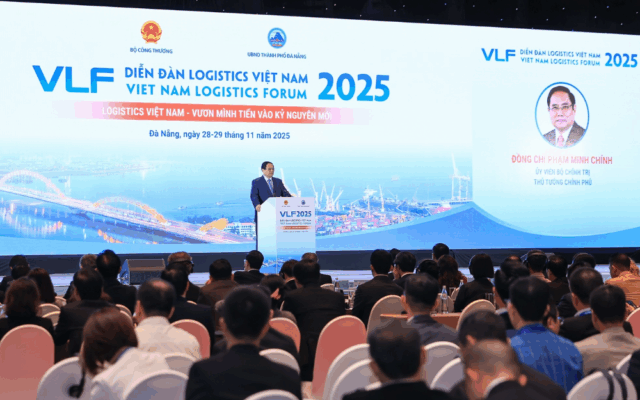
Beyond high costs, Prime Minister Pham Minh Chinh identified several persisting bottlenecks, including:
– Weak regional linkages and infrastructure connectivity.
– Incomplete digitalization of border procedures.
– A predominance of small and medium-sized enterprises (SMEs) with a lack of industry leaders.
– The absence of a national logistics center.
– Slow innovation in institutions and policies.
– Digital and green infrastructure failing to meet current requirements.
– The lack of data centers to support AI and digital transformation within the sector.
Minister of Industry and Trade Nguyen Hong Dien added: “These are major bottlenecks that must be resolved through synchronized and feasible solutions to unlock resources and propel the industry’s development.”
Vietnam international logistics exhibition 2025 (VILOG 2025)
VILOG 2025 brought together over 350 enterprises from more than 20 countries with 480 booths, attracting a large number of investors and strategic partners. This exhibition served as a platform for seaports, operators, and shipping lines to present initiatives aimed at enhancing the competitiveness of Vietnam’s entire logistics ecosystem.
VILOG 2025 also provided an opportunity for SOTRANS Group and its member entities (Sowatco, Sotrans Logistics, Vietranstimex) to affirm their pioneering roles in the logistics industry, expand networks, and accompany Vietnam’s sustainable development on the global logistics map. Highlight activities of SOTRANS Group & ITL at VILOG 2025 included:
(01) Integrated & Smart Solutions: Introducing integrated, intelligent, and sustainable logistics solutions designed to meet the diverse needs of customers and partners.
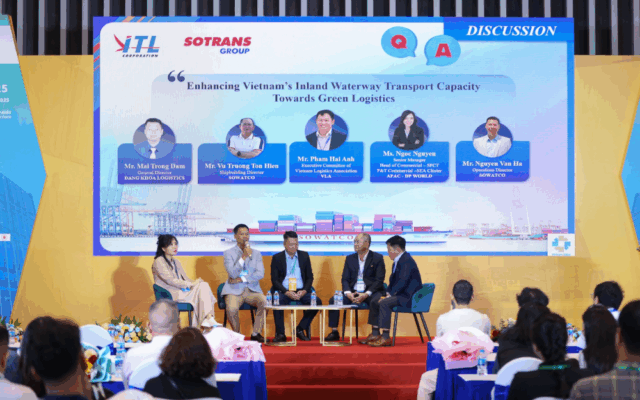
(02) Green Inland Waterways: Our subsidiary Sowatco participated in the seminar “Enhancing Vietnam’s Inland Waterway Capacity towards Green Logistics,” reaffirming a commitment to eco-friendly logistics development.
(03) Social Responsibility: Launching the “Vietnam Logistics Safe & Excellence Driving Competition” (VLA & VTL) directly at the STG & ITL booth, emphasizing the importance of occupational safety and corporate social responsibility (CSR).
Outstanding results from port operations 2024-2025
Exceptional volume and operational growth
According to the Vietnam Maritime Administration, the total cargo throughput via Vietnam’s seaport system in 2024 exceeded 864 million tons, a 14% increase year-over-year. Notably, container throughput surged by 21%, reaching nearly 29.9 million TEUs. The increased capacity to handle a higher volume of vessels and cargo highlights seaports as the primary driver for import-export activities and domestic-international trade flows.
Major Vietnamese seaport companies also reported impressive financial results for 2024, with many units exceeding their targets in both revenue and profit. This reflects the soaring demand for maritime transport and the improved operational efficiency of enterprises within the system.
Vietnam seaports in international rankings
In 2025, three major Vietnamese ports, Hai Phong, Ho Chi Minh City, and Cai Mep-Thi Vai, were honored in the Top 50 Busiest Container Ports in the World, as evaluated by DynaLiners.
– Ho Chi Minh City Port: Led the trio with a throughput of over 9.1 million TEUs (2023 data), ranking 22nd globally.
– Hai Phong and Cai Mep: Ranked 30th and 31st respectively, with outputs of 7.1 million and 7 million TEUs.
– Notably, Cai Mep was recognized in the group of ports with a growth rate exceeding 25%.
DynaLiners Millionaires also ranked Vietnam 6th in the list of countries with the largest container seaport systems. The combined throughput of the three main hubs reached over 23.2 million TEUs, a 16% increase from 20.1 million TEUs in 2023.
Strategic projects, investments, and planning 2025
Deep-water port development & connected infrastructure
A major highlight of Vietnam’s maritime sector in 2025 is the accelerated development of deep-water ports and multimodal connectivity projects (sea-rail-road). Key hubs such as Lach Huyen (Hai Phong) and Cai Mep – Thi Vai (Ba Ria – Vung Tau) have significantly enhanced their capacity to accommodate ultra-large container vessels, playing a vital role in attracting transcontinental service routes.
In parallel, comprehensive logistics infrastructure projects—including upgrades to inland waterway systems and railways connecting industrial zones to ports and border gates—are being deployed with expected completion between 2025 and 2030. These initiatives aim not only to increase operational capacity but also to reduce transshipment costs and shorten lead times for cargo circulation.
Policy reform & port service price transparency
2025 marks significant milestones in maritime management policy, notably the regulation on the public disclosure of seaport service prices effective from January 15, 2025. This move aims to bolster transparency and competitiveness within the maritime logistics industry. The regulation mandates that services such as pilotage, wharfage, and container stevedoring must be clearly published, enabling businesses to plan costs more effectively and fostering healthy service competition.
Driving new investment & international cooperation
Vietnamese seaport enterprises are intensifying international partnerships to attract capital and advanced technology. The Can Gio International Transshipment Port project has been approved with substantial investment, aimed at developing a powerful new international transshipment hub for the Southern region. Simultaneously, port joint ventures, such as those in the Lach Huyen area between Japanese and Vietnamese partners, continue to expand, enhancing transshipment capabilities and providing modern, world-class logistics services.
Conclusion
The year 2025 marks a positive turning point for Vietnam’s maritime and logistics industry. From impressive import-export growth and infrastructure expansion to proactive policy reforms and investment attraction, the sector is successfully driving green logistics and digital transformation. These achievements not only solidify Vietnam’s position on the global logistics map but also lay a strong foundation for a new development phase from 2026 to 2035. This progress serves the ultimate goal of sustainable economic growth and elevates Vietnam’s international standing.
(SOTRANS Group News)