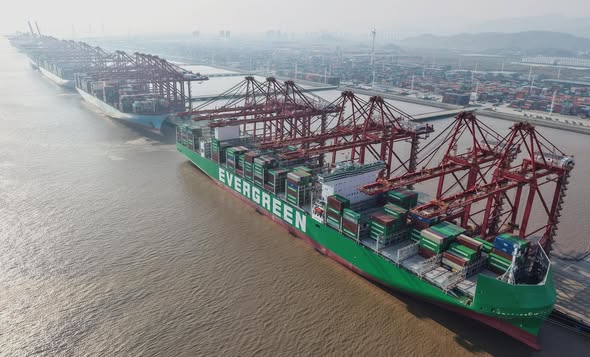
Against the backdrop of a global maritime trade slowdown and shifting trade policies, Ningbo Zhoushan Port (China) has delivered a groundbreaking “shockwave” to the logistics industry. By the end of 2025, the port officially surpassed the 1.4 billion-ton cargo throughput mark, maintaining its crown as the world’s largest port for 17 consecutive years.
Ningbo Zhoushan Port and the “Speaking Numbers” of 2025
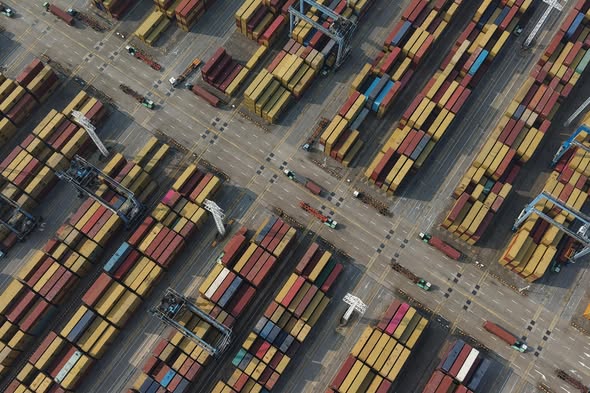
Record-breaking Cargo Handling 2025 marked a transformative leap in the comprehensive operational capabilities of Ningbo-Zhoushan Port. Beyond total cargo tonnage, for the first time in history, the port’s container throughput exceeded 40 million TEUs. This milestone firmly solidifies Ningbo Zhoushan Port’s position as the third-largest container port globally.
Achieving such growth in a challenging year demonstrates the exceptional adaptability of the Chinese port management system in response to fluctuations in international trade flows.
A Mega-Scale Infrastructure Ecosystem
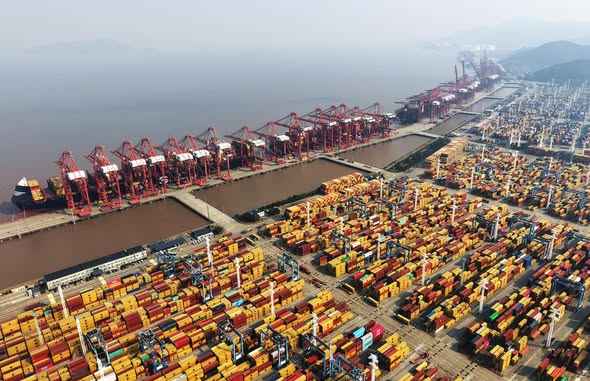
The strength of Ningbo-Zhoushan Port is no coincidence; it stems from a strategic, large-scale infrastructure investment regarded as the “backbone” for reaching the 1.4 billion-ton record. By 2025, the two 10-million-TEU class container terminals at Chuanshan and Meishan reached full operational capacity.
Notably, the global maritime community has been impressed by the Shulanghu Ore Transfer Terminal, the world’s only facility capable of simultaneously berthing and unloading two 400,000-ton ultra-large vessels. These facilities serve as the key “engines” allowing the port to maintain record-breaking efficiency.
Limitless Global Connectivity
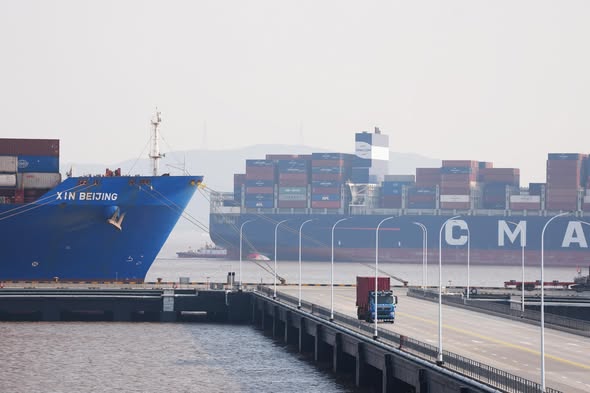
By the end of 2025, Ningbo Zhoushan Port’s container shipping network expanded to 309 routes. This extensive coverage connects the port directly to over 700 ports in more than 200 countries and regions.
On average, the port receives and dispatches nearly 300 cargo vessels daily. With this remarkable efficiency, Ningbo Zhoushan Port’s Port Connectivity Index currently ranks second globally. This holds significant importance for international logistics enterprises like SOTRANS Group, enabling the optimization of transit times and shipping routes for customers.
 |
 |
 |
 |
(Photo: China Xinhua News)
International Expansion Strategy and Lessons for Vietnam’s Logistics
Beyond local infrastructure, 2025 witnessed a surge in Ningbo Zhoushan Port’s overseas business expansion. They have established and refined a logistics service network and warehousing systems in key markets:
-
In Germany and Dubai: Completing state-of-the-art bonded warehouse systems.
-
In Singapore and Japan: Establishing representative offices for direct operation and supply chain connectivity.
This serves as a vital lesson for Vietnam’s logistics industry: the importance of not only building “hard infrastructure” (ports) but also developing a global “soft network” to control the supply chain from end to end.
As the most critical maritime gateway of the 21st Century Maritime Silk Road, the stability and growth of Ningbo Zhoushan Port are optimistic signals for global trade in 2026. For Vietnamese import-export businesses, leveraging the shipping routes connected to this port will help mitigate congestion risks and optimize inland waterway transport costs.
SOTRANS Group will continue to closely monitor movements at major international ports to provide the most optimal supply chain solutions for our valued customers and partners.
Read more: Vietnam Logistics 2025 highlights marking a breakthrough into a new era
(SOTRANS Group News)